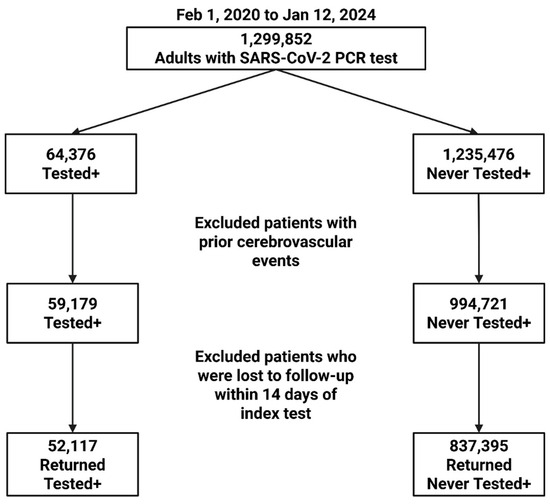
Background: SARS-CoV-2 infection could trigger hypercoagulation and hyperinflammation that may predispose patients to cerebrovascular events. The long-term risk of stroke among COVID-19 patients remains unclear. This study investigated the long-term risks of ischemic stroke and transient cerebral ischemia (TCI) among patients with and without COVID-19. Methods: We conducted an observational cohort study in the Montefiore Health System (February 2020–January 2024), with 52,117 COVID+ and 837,395 COVID− patients without prior cerebrovascular events. Demographics, comorbidities, insurance, unmet social needs, and median income were adjusted for using inverse probability weighting. Cox-proportional regression hazard ratios (HR) and their 95% confidence intervals were computed for ischemic stroke and TCI. Results: Compared to COVID− controls, ischemic stroke risk was higher among hospitalized COVID+ patients (HR = 1.32 [1.12–1.55]) and non-hospitalized COVID+ patients (1.21 [1.05–1.39]). Compared to COVID− controls, TCI risk was similar among hospitalized COVID+ patients (1.00 [0.75–1.33]), but higher among non-hospitalized COVID+ patients (2.15 [1.81–2.56]). Conclusions: Hospitalized and non-hospitalized COVID-19 patients had a higher long-term risk of ischemic stroke while only non-hospitalized COVID-19 patients had a higher long-term risk of TCI. These findings underscore the needs for long-term monitoring of cerebrovascular risk factors in COVID-19 survivors.